

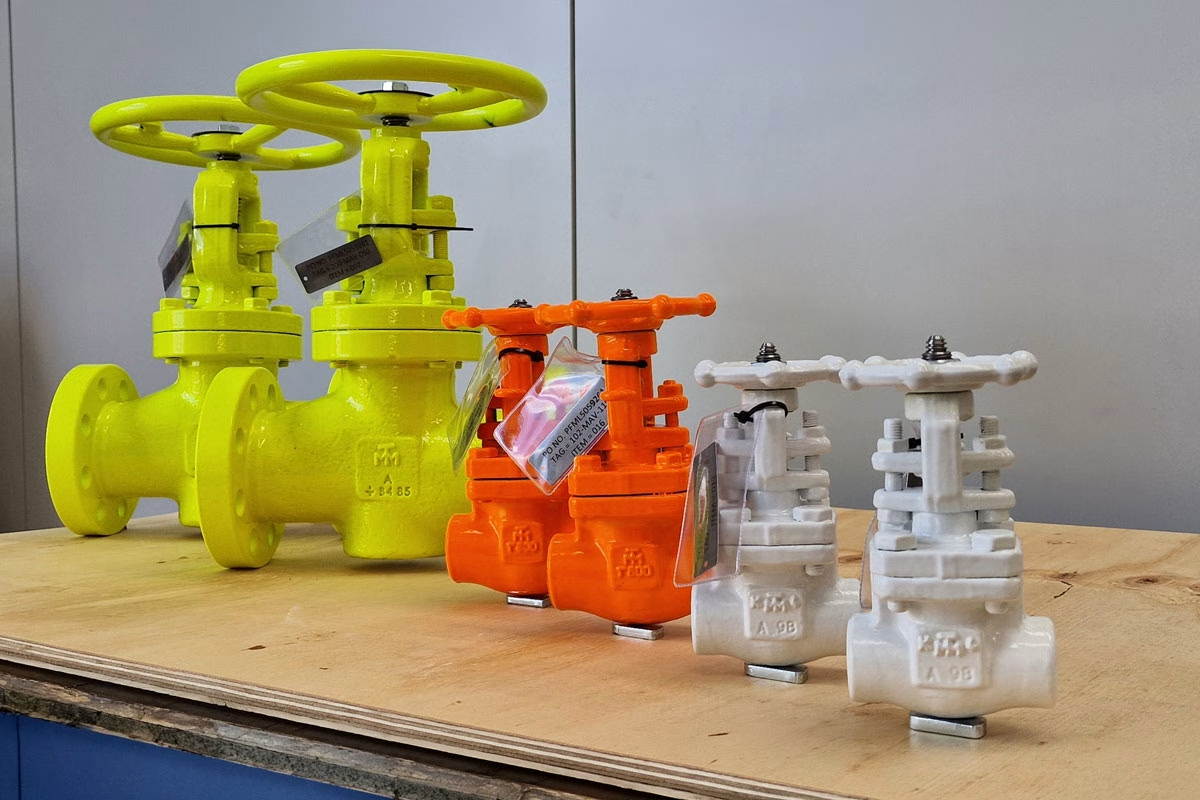
MTM Valves il 100% dei prodotti è sottoposto a FAT (Factory Acceptance Test). Le verifiche non si limitano ai collaudi funzionali o idraulici, ma comprendono anche controlli volti a garantire l’integrità dei materiali, l’assenza di difetti e la completa tracciabilità. In questo ambito rientrano i controlli non distruttivi (NDE, Non-Destructive Examination), l’identificazione positiva dei materiali (PMI, Positive Material Identification) e altri controlli speciali previsti dall’ordine del Cliente.
1. NDE: cosa sono
I controlli NDE comprendono una serie di verifiche finalizzate a valutare l’integrità del componente senza comprometterne la funzionalità o danneggiarlo. L’obiettivo è individuare eventuali indicazioni e accertare che tali anomalie siano conformi ai limiti stabiliti dalle norme internazionali di riferimento. In questo modo, i controlli NDE non solo riducono i rischi durante l’esercizio, ma forniscono anche una documentazione completa a supporto dei materiali, rafforzando la qualità e l’affidabilità del prodotto.
2. Quando si richiedono controlli speciali sulle valvole
I controlli speciali sono applicati in presenza di condizioni particolarmente critiche o requisiti stringenti, come servizi ad alta pressione, temperature estreme, fluidi aggressivi, standard di settore specifici o esigenze qualitative. In questi casi, ogni controllo viene definito in modo chiaro, stabilendo cosa verificare, come eseguire le verifiche e i criteri di accettazione, garantendo così affidabilità, sicurezza e conformità del prodotto.
3. I principali NDE
Tra i controlli NDE più comuni sulle valvole e sui componenti associati si includono:
- PT (Liquid Penetrant Test): highlights surface defects
- MT (Magnetic Particle Test): similar to PT, but applicable to ferromagnetic materials; effective for detecting surface and sub-surface defects.
- UT (Ultrasonic Test): uses ultrasound to detect internal defects
- RT (Radiographic Test): industrial radiography to identify internal discontinuities, often applied to welds or critical areas.
- VT (Visual Test): visual inspection for obvious defects, manufacturing imperfections, or signs of corrosion.
- LT (Leak Test / Tracer Gas): checks components for leaks and leakage, using tracer gas or equivalent methodologies.
- PMI (Positive Material Identification): confirms the chemical composition of materials, ensuring that they meet the required specifications.
- Verification of ferrite content: checking the percentage of ferrite in materials to ensure mechanical properties and corrosion resistance.
- Verification of coating thickness: ensures uniform surface protection that meets specifications.
- Hardness testing: measuring the hardness of materials to confirm mechanical strength and compliance with design requirements.
By combining these controls, it is possible to guarantee the integrity, safety and compliance of products with regulatory and contractual requirements, ensuring reliability and quality throughout the entire life cycle of the component.
4. Set the request carefully
To avoid misunderstandings, it is useful to define already at the offer and order stage:
- Which components will be subject to NDEs:
- the methods to be applied (PT, MT, UT, RT, etc.) and their extent, e.g. 100%, random or on specific areas;
- reference standards or procedures and their acceptance criteria;
- Any witnesses from the client or expected hold points;
- The structure of the report and the minimum content required for acceptance.
This way, the supply is completely verifiable and transparent, facilitating audits, testing, and final acceptance.
Special Inspections: Integrity, Traceability, and Verifiability
NDE and special inspections on valves are essential for ensuring and verifying material quality, component integrity, and material compliance. MTM Valves integrates these inspections when required by specifications or requested by the customer, providing structured reports consistent with the supply documentation package. Almost all NDE inspections are performed in-house by MTM Valves, with personnel qualified according to the ISO 9712 standard, ensuring high levels of expertise, reliability, and traceability.
Contact us to discuss your project’s inspection requirements: we can help you define the inspections.