

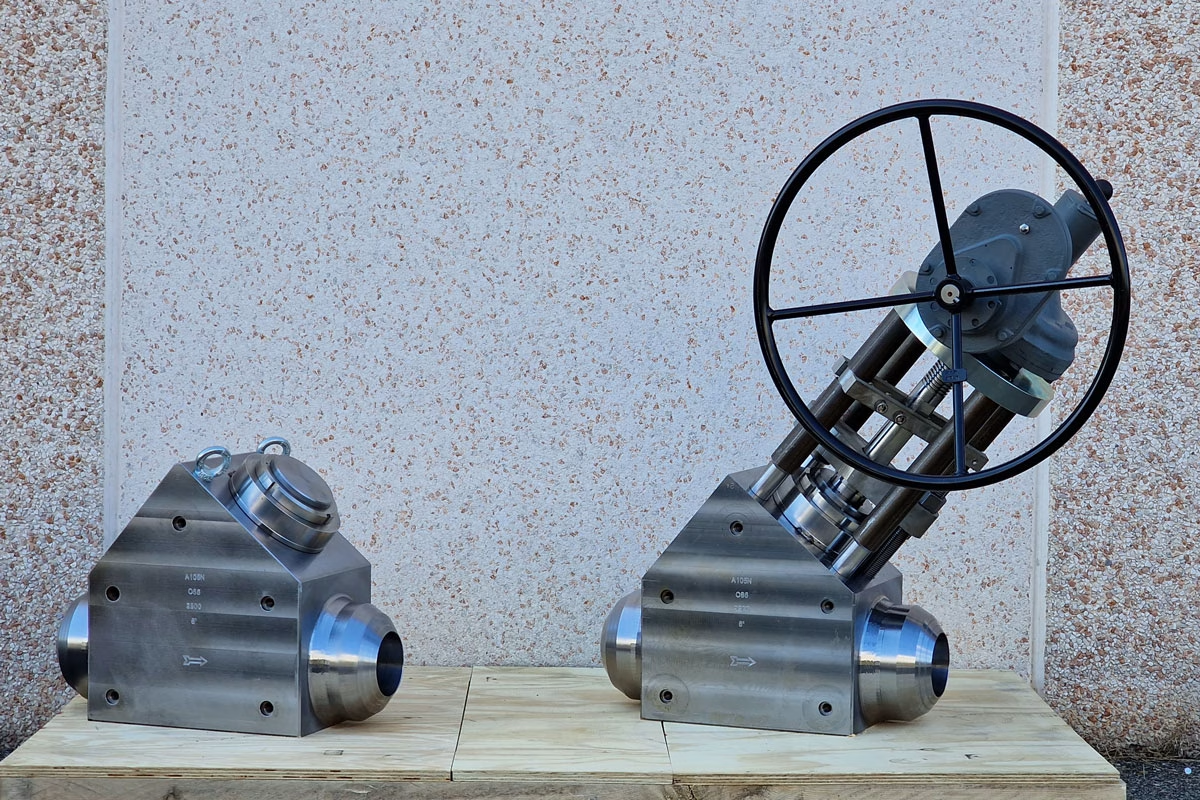
In HP/HT applications, i.e. high pressure and high temperature, bonnet design is not a minor detail: it affects sealing, durability, temperature and pressure variation management, and maintenance activities. This is precisely where the comparison between pressure seal and bolted bonnets comes in. MTM Valves, which specialises in forged valves for critical services, supports the selection of the architecture that best suits the operating profile and design requirements.
1. Bolted Bonnet: structure and points to note
In bolted bonnets, the cover is secured to the body using bolts/tie rods and the seal is provided by a gasket compressed by tightening. This is a well-established solution suitable for many applications, even severe ones, provided that the design and assembly are consistent with the service.
In the design of bonnets for high-pressure applications, the most relevant factors are:
- bolt tightening
- gasket behaviour with temperature and thermal cycles
- finishes and flatness of mating surfaces
With frequent changes in temperature and pressure, tightening management and gasket selection become determining factors for seal repeatability.
2. Pressure Seal Valves: what they are
In pressure seal bonnets, internal pressure helps to increase the effectiveness of the cover seal. The system is designed so that, as pressure increases, the closure tends to ‘seal’ more effectively than solutions where the seal depends mainly on the tightening of the bolts.
This feature is often cited among the advantages of pressure seal valves, especially in high-pressure and high-temperature conditions, where the reliability of the sealing system is a fundamental requirement.
3. Pressure seal valve advantages: when they become concrete
Under high pressure and high temperature conditions, the advantage of the pressure seal is not ‘theoretical’: it becomes relevant when the valve operates within the pressure and temperature range for which the architecture was designed. In these cases, it is possible to achieve:
- more stable bonnet sealing under severe conditions
- better response to increasing pressure (in terms of sealing)
- reduced dependence on bolting to maintain the seal
However, the pressure seal architecture must be selected and configured consistently: materials, geometries and controls must be compatible with the operating profile and planned maintenance.
4. The main criterion: operating profile and change in operating conditions
The key point in comparing pressure seals and bolted bonnets is consistency with the actual operating profile. In particular, the following must be considered:
- thermal stability: rapid or cyclical variations can affect preloads and couplings
- frequency of pressure changes: start/stop, ramp-up, sudden variations
- duration of exposure to high temperatures
- process conditions such as fluid type, potential aggressiveness and presence of contaminants
In many plants, changes in operating conditions are as important as or more important than nominal conditions. The bonnet design must be selected to remain stable even outside the ‘ideal point’ of operation.
Designing the bonnet according to the service
When comparing pressure seal and bolted bonnets, the best choice is the one that guarantees sealing stability, reliability and sustainable maintenance in the actual profile of the plant. MTM Valves supports the definition of the most suitable architecture, integrating design and controls for critical applications.
Contact us and we can evaluate the most suitable bonnet design together and set clear and verifiable specifications.